Taiwan Minister Warns of Disinformation from China: "Information Manipulation Affects Democracy"

In Taiwan, where there is heightened vigilance against information manipulation from China, comprehensive measures are being undertaken to counter misinformation and disinformation. These measures include fact-checking, media literacy, and the establishment of legal frameworks.
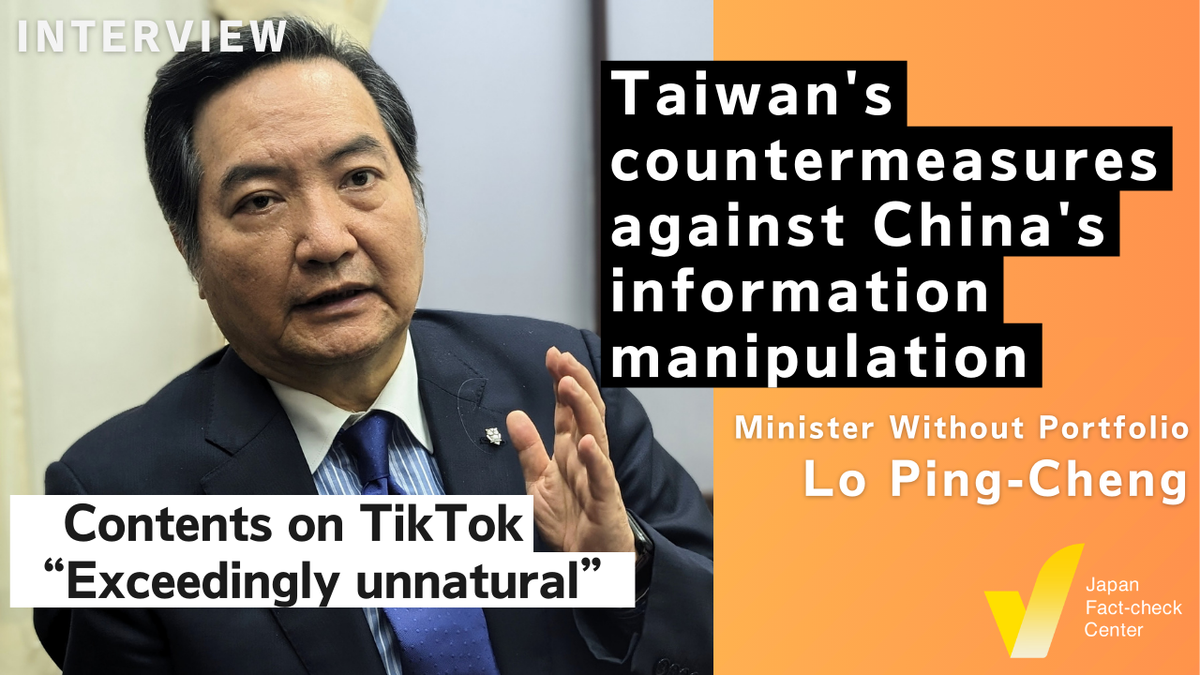
The Japan Fact-Check Center (JFC) conducted an interview with the Minister without Portfolio, Lo Ping-cheng, who is comprehensively responsible for the government's coordinative efforts against disinformation.
※これは「中国からの偽情報対策、TikTokの不自然なデータ 台湾大臣「選挙に影響」」の英語版です(This is the English version of the article mentioned above)。
The Impact of Disinformation on Elections
The presidential election in Taiwan got global attention, particularly concerning the spread of disinformation and the influence from China. What was the actual impact of these factors?
"It's challenging to present clear indicators, but our analysis suggests that disinformation had a certain impact on the elections. Much of it appears to have originated from China."
Do you have specific data?
"We have various data points, but for instance, an analysis conducted by Taiwan AI Lab on TikTok revealed that 62% of the content related to China was favorable towards China, endorsing the idea of unification with Taiwan. Conversely, 95% of the content mentioning Taiwan was negative, with narratives suggesting the Democratic Progressive Party (DPP) is leading Taiwan to ruin. Regarding the newly elected DPP president, Lai Ching-te, 67% of the content was negative, whereas for the defeated People's Party candidate, Ko Wen-je, 76% was favorable."
"These figures are exceedingly unnatural. There is a concerted effort involving comments by individuals associated with the Chinese government, influence campaigns targeting influencers, and the manipulation of algorithms. It appears to be a sophisticated information operation."
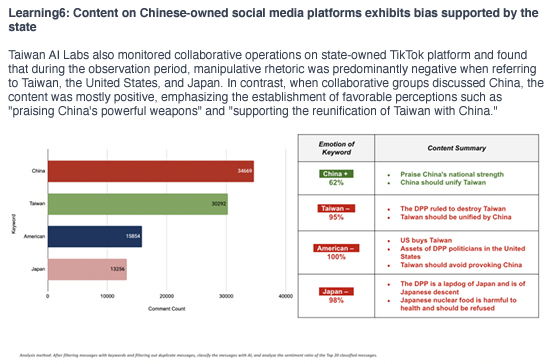
According to a report by the Taiwan AI Lab, a study of the top spreading discourses on TikTok after filtering for specific keywords and removing duplicates found that pro-China and anti-Taiwan messages were by far the most common, respectively. The analysis also found that there were many anti-Japan messages.
Government Initiatives "Legal regulation is a Last Resort"
In 2019, the Taiwanese government compiled a comprehensive package of measures to combat disinformation. What measures were implemented in this election, and how effective were they?
"The issue isn't just misinformation. The broader concern is how information manipulation poses a threat to democracy. The internet, while immensely beneficial, also facilitates the spread of harmful content that endangers democracy. A comprehensive approach is necessary to fully grasp and address this challenge."
How did the government respond?
"In a democratic society, restricting content through legislation is not the preferred method; it is a last resort. However, under certain circumstances, it becomes a necessary measure. I am aware that some countries have already started implementing legal regulations, though situations vary from one country to another. For example, the European Union has the Digital Services Act, and the United Kingdom has the Online Safety Act . These can be considered relatively good examples of addressing the issue from a broader perspective. They focus on holding social media platforms accountable and ensuring they take the necessary actions. There are lessons here for us as well."
What is the current state of legal regulation in Taiwan?
"In 2022, Taiwan attempted to introduce the bill similar to the Digital Services Act and the Online Safety Bill, but they did not pass due to opposition from the opposition parties and public opinion. In our society, there's a strong caution against regulating the internet."
"As a result, we do not have laws that comprehensively regulate social media platforms. Our regulations are limited to specific content, such as child pornography, internet advertisements with fraud contents, and AI-generated images and videos during elections. I believe there's much more we need to do."
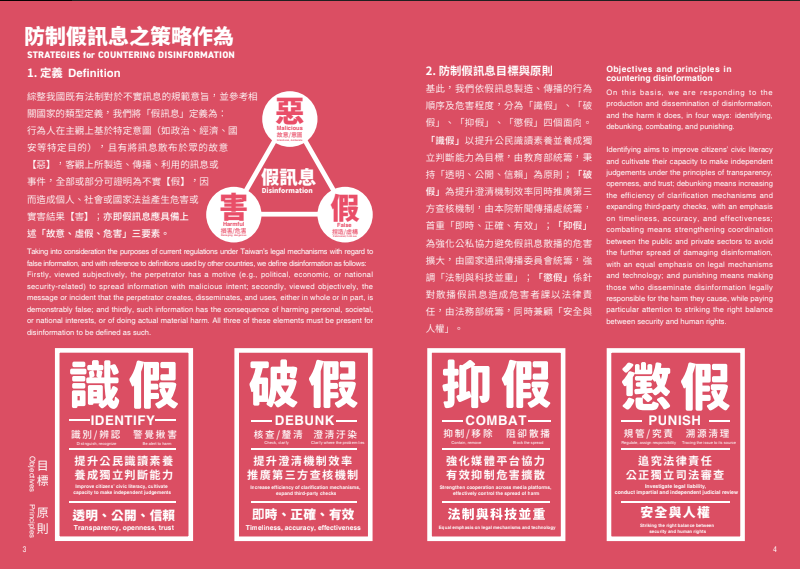
The Taiwanese government has compiled a comprehensive set of measures to combat disinformation, focusing on four main strategies: identification, verification, suppression, and punishment. These efforts are undertaken in collaboration not only by the government but also with fact-checking organizations and others.
The risks to freedom of speech
Regarding legal regulations, there are concerns about compromising freedom of speech.
"Both Japan and Taiwan are democracies, where the rule of law and freedom of speech are paramount. Regulatory measures through laws are seen as the last resort. The Digital Services Act of the EU and the Online Safety Act l of the UK are relatively new, and it remains to be seen how effective they will be and whether they will have any adverse effects on freedom of speech."
"Not just government efforts, but verifying misinformation by independent fact-checking organizations is crucial. And, in the long term, the promotion of media literacy is key. It's not about which of these is more important; all three pillars are necessary, and cooperation among all stakeholders is essential."
How to work with fact-checking organizations
The International Fact-Checking Network (IFCN) calls for fairness and nonpartisanship as principles of fact-checking. How is the Taiwan government working with fact-checking organizations?
"The independence of fact-checking organizations is crucially important, as it directly relates to their credibility in society. Fortunately, in Taiwan, fact-checking bodies have maintained their independence. They are neutral and have gained the trust of society, not serving as spokespeople for the government."
So, in what areas are you deepening cooperation?
"While the Taiwanese government respects the independence and role of fact-checking institutions, it has also engaged in numerous cooperative projects to promote media literacy. Such cooperation does not compromise independence. We invite fact-checking organizations to government events to help inform attendees about fact-checking and media literacy. Conversely, myself and other government officials sometimes participate in events organized by fact-checking groups."
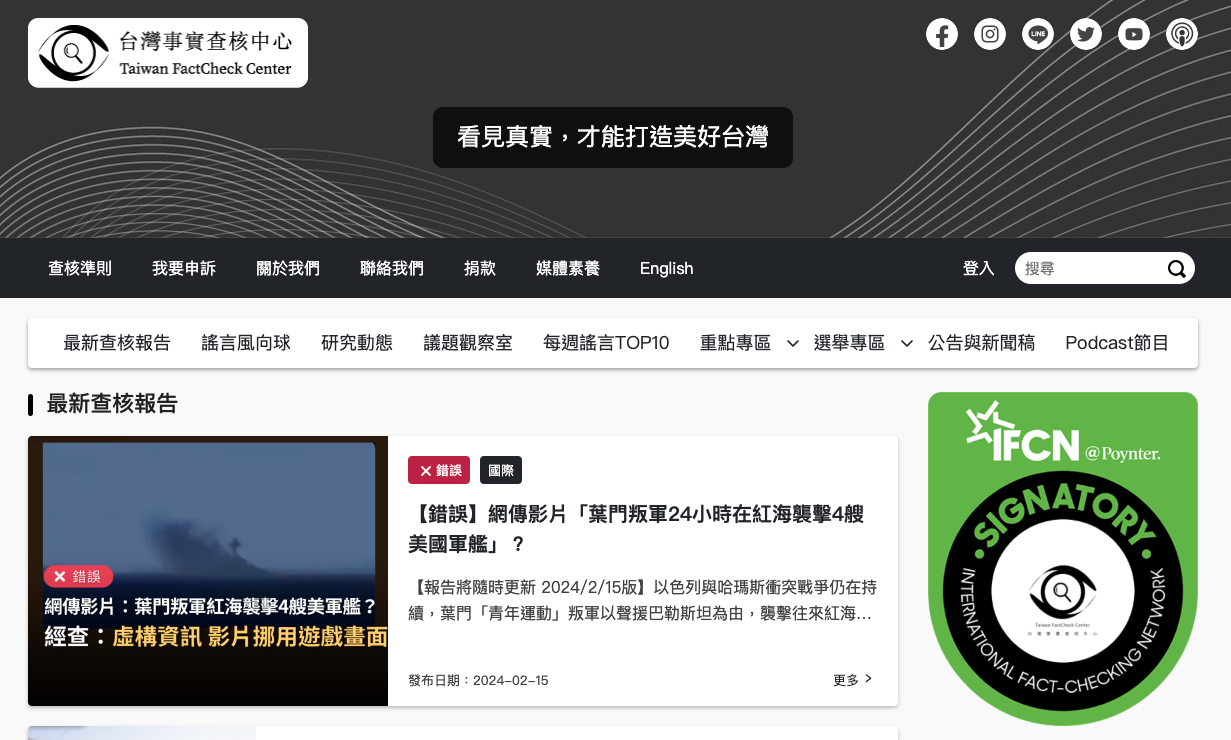
The Taiwan Fact-Check Center (TFC) employs 17 full-time staff members, not only for fact-checking purposes but also includes an education team dedicated to promoting media literacy.
Social Media Platforms Initiatives
Cooperation among all stakeholders is essential in combating disinformation and information manipulation. What is the relationship between social media operators, where information dissemination occurs, and the government?
"Collaboration with social media platforms is essential. In Taiwan, initiatives with Google, Meta, and LINE began in 2019. These platforms established contact points with relevant Taiwanese ministries before the elections. The Taiwanese government has also partnered in LINE's efforts to verify information in cooperation with Taiwanese fact-checking organizations."
Does this mean a form of cooperation that includes fact-checking organizations?
"For example, when it comes to verifying misinformation, the relevant ministries respond swiftly with the necessary information and confirmations. When fact-checking organizations reach out to social media platforms, those platforms act to remove the information or limit its spread, not based on government directives, but in response to reports from the fact-checking organizations."
How to respond to polarization that divides society
In conversations with people in Taiwan during this election, there are widespread comments that "the division between supporters of the ruling and opposition parties has deepened." It suggests that the kind of political polarization seen in the United States is also becoming evident in Taiwan.
"Taiwan faces the presence of China as its nearest neighbor, which seeks to manipulate our public opinion and threatens us with military force. In Taiwan, there are those who are pro-China and those who strive to protect Taiwan's sovereignty. Such differences in opinion provide China with opportunities to intervene in Taiwan and enable election interference and polarization of public opinion."
As polarization intensifies, engaging in calm and democratic discussions with those holding differing opinions becomes challenging, leading to societal instability. Are there any measures to address this issue?
"How to address this polarization is a challenging dilemma many democratic nations face. The question of how to maintain social cohesion in defense of democracy is paramount. Personally, I believe there is no single, ultimate solution to counter information manipulation and cognitive warfare. A long-term strategy is necessary."
What specific initiatives are to address this issue?
"We need to nurture the younger generations to believe in the values of democracy and to bear responsibility as digital citizens who trust in a democratic society. This is essential for defending against information manipulation."
These are long-term measures that should be taken by society as a whole. What should the government do?
"Another vital aspect for the government is to become more transparent and open towards society. Enhancing the government's credibility can, in turn, bolster trust in democracy. This requires improving the skills of individual government employees. It's crucial to leverage digital tools to enable more effective communication."
"We must enhance our ability to explain politics and policies using the channels that people are using, not just text but increasingly videos as well. While we have already embarked on this, it is still insufficient. We must also learn from the approaches of other democratic nations."
Progress in international cooperation "offers hope"
The package of countermeasures against disinformation compiled by the Taiwanese government also addresses the importance of international cooperation.
"While I cannot delve into specifics, Taiwan already cooperates with several countries. We are sharing expertise in government employee training and public relations concerning policies, optimizing guidelines suited to Taiwan. The exchange of information through diplomatic channels is also crucial."
"Many people visit Taiwan, and we likewise visit other countries, learning from each other. International organizations are also paying attention to this issue. This trend offers hope in the fight against disinformation and information manipulation."
(The interview was conducted in Chinese and English through an interpreter. For readability, some expressions have been adjusted with consent.)
判定基準などはJFCファクトチェック指針をご参照ください。
毎週、ファクトチェック情報をまとめて届けるニュースレター登録(無料)は、上のボタンから。また、QRコード(またはこのリンク)からLINEでJFCをフォローし、気になる情報を質問すると、AIが関連性の高いJFC記事をお届けします。詳しくはこちら。